Speakers

Professor Nicola Spence

Paul-Enguerrand Fady

Plenary
Session chair: Sophie Powell (University of Birmingham)
Join our panellists for “day-in-the-life” insights into their roles and policy-focused career paths, as they discuss how MMEG research informs and influences real-world policy decisions.
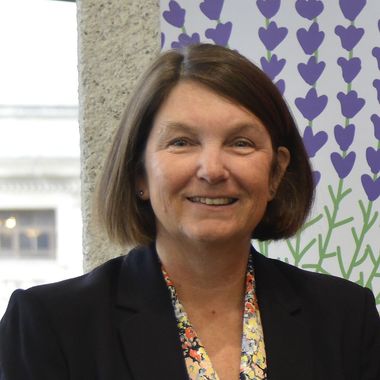
Nicola is the UK Chief Plant Health Officer at Defra and advises ministers, industry and others about the risks posed by plant pests and diseases, ensuring that measures are in place to manage those risks and minimise their impact, as well as leading the operational response in the event of a disease outbreak.
Nicola is an expert in plant health and international plant trade and previously researched virus diseases of horticultural crops in the UK and internationally for over 20 years. She is a former President of the British Society for Plant Pathology, and a Fellow of the Royal Society of Biology, Honorary Professor at the University of Birmingham, and a Trustee of The Royal Horticultural Society and The Yorkshire Arboretum. She was awarded a CBE for services to plant health in 2022.
She has a BSc in Botany from the University of Durham, an MSc in Microbiology from Birkbeck College, University of London and a PhD in Plant Virology from the University of Birmingham. The subject of her PhD was Bean Common Mosaic Virus in Phaseolus beans in Africa.

In his role as Biosecurity Policy Manager at CLTR, Paul-Enguerrand leads an extensive portfolio of workstreams in our Biosecurity Policy Unit spanning immediate, near-term, and long-term priorities in supply chain resilience for medical countermeasures, nucleic acid synthesis screening, and mirror life.
Paul-Enguerrand brings to this role several years of experience working in Parliament, covering policy areas across science, health, agriculture, environment, and innovation. His Parliamentary work has focused on advising senior policymakers on One Health, infectious disease, antimicrobial resistance (AMR), and the microbiome. He was previously Policy Research Lead for the British Society for Antimicrobial Chemotherapy, where he led global projects on antibiotic supply chains and antimicrobial stewardship.
He undertook his doctoral research in Pharmaceutical Science as part of the London Interdisciplinary Doctoral Programme, supervised by Prof. James Mason at King’s College London as well as Prof. Mark Sutton and Dr Lucy Bock at the United Kingdom Health Security Agency. His thesis focused on AMR.
Prior to his PhD, Paul-Enguerrand obtained B.Sc. in Microbiology and Immunology (with a minor in Linguistics) from McGill University.

Catherine is a climate scientist whose research bridges plant health, pest and disease modelling, and climate adaptation. Catherine has led major projects on the transcontinental spread of the wheat rust pathogen, integrating atmospheric dispersion modelling with crop disease risk assessment to inform biosecurity and policy responses. As a Climate Change Adaptation Expert Advisor for Defra, Catherine provided the evidence base for climate impacts on pesticides and integrated pest management. Catherine has also contributed to the UK Food Security Report by Defra and the Global Strategic Trends Report by the Ministry of Defence, and she has authored international pest risk guidance with the International Pest Risk Research Group to shape strategies for integrating climate change into pest risk analysis, supporting national and global efforts to safeguard crops under changing climates.
Catherine has BSc in Environmental Management & Technology, an MPhil in GIS & Remote Sensing and a PhD in Climate Modelling. She joined the Met Office in 2016 and took up a joint position at the University of Exeter in 2019.